Few words create as much anxiety in a consultation room as these: "You need bypass surgery."
If you or a loved one has just heard them, take a breath. Over the past 32 years, our team has performed more than 50,000 cardiac surgeries, and I can tell you that the fear patients carry into their first consultation is almost always larger than the reality of the procedure itself. Bypass surgery today is one of the most refined, most studied, and most successful major operations in all of medicine.
This guide explains — in plain language — what bypass surgery is, why it is recommended, what actually happens in the operating theatre, and what your road to recovery looks like.
What exactly is bypass surgery?
Your heart is a muscle, and like every muscle it needs its own blood supply. That supply comes through the coronary arteries — small vessels that run along the surface of the heart. When cholesterol deposits (plaques) narrow or block these arteries, the heart muscle is starved of blood. The result is chest pain (angina), breathlessness, or in the worst case, a heart attack.
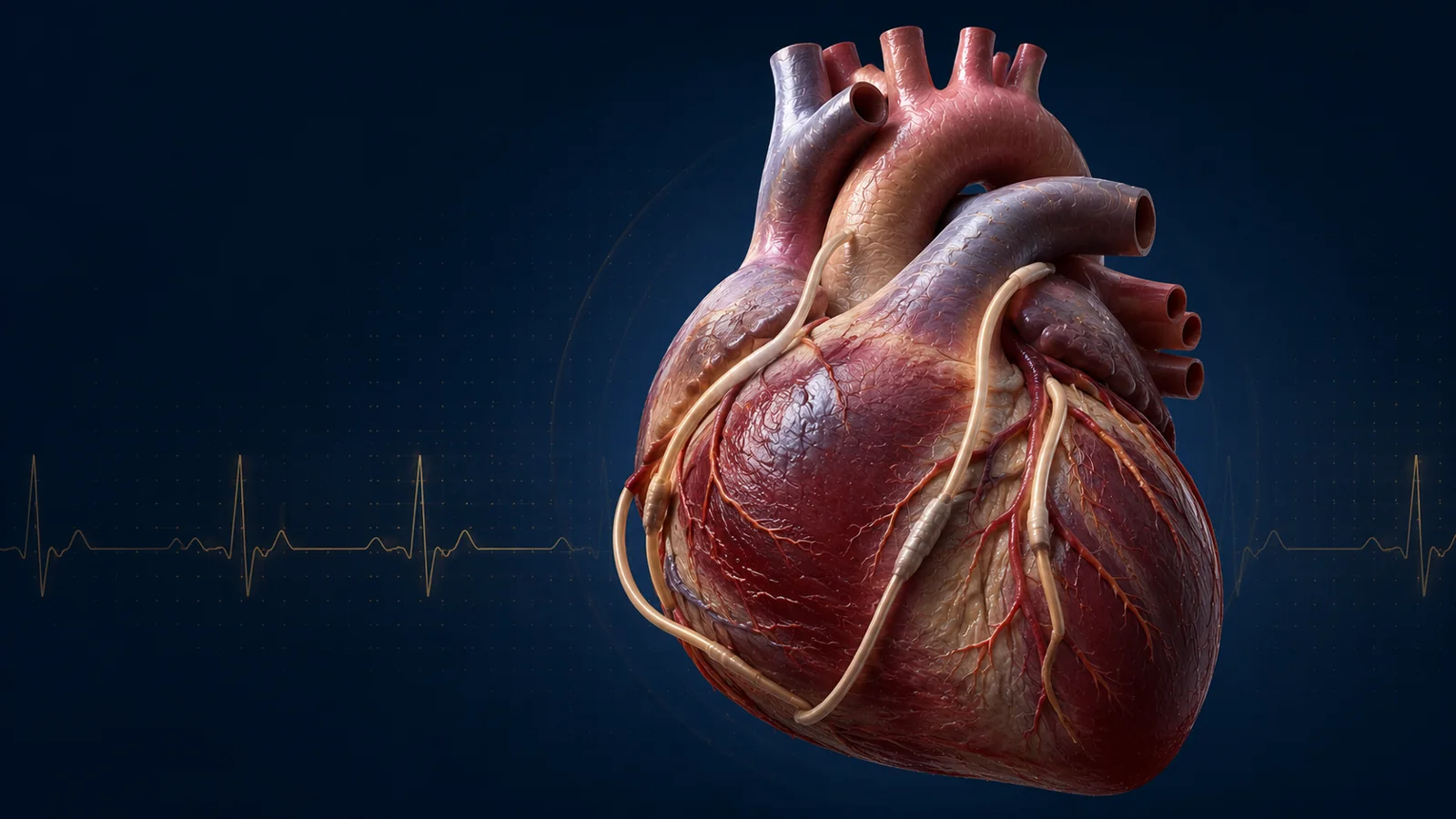
Coronary Artery Bypass Grafting — CABG, or simply "bypass surgery" — does exactly what the name suggests. We take a healthy blood vessel from elsewhere in your body and use it to create a detour around the blockage. Blood flows through the new route, and the heart muscle beyond the blockage receives its full supply again.
Think of it as building a flyover over a permanently jammed crossroads. The jam is still there — but traffic moves freely over it.
Why not just do angioplasty?
This is the most common question patients ask, and it is a fair one. Angioplasty (with stents) is an excellent treatment for many patients. But bypass surgery is generally recommended when:
- Multiple arteries are blocked — typically three or more vessels
- The left main artery is involved — the "highway" that supplies most of the heart
- You have diabetes with multi-vessel disease — long-term studies consistently show better outcomes with surgery in this group
- The heart's pumping power is already reduced — where complete, durable revascularisation matters most
- Blockages are long, calcified, or at branch points — where stents perform poorly
The decision is never one-size-fits-all. It is made jointly by your cardiologist and cardiac surgeon after studying your angiography, echo, and overall health — and a good team will happily explain why they are recommending one path over the other.
The grafts: why the choice of vessel matters
Not all bypasses are equal. The vessel we use for the detour determines how long the bypass lasts.
LIMA (Left Internal Mammary Artery) — an artery from inside the chest wall, and the gold standard worldwide. A LIMA graft to the heart's main artery has excellent patency even 20 years after surgery.
BIMA (Bilateral Internal Mammary Arteries) — using both chest-wall arteries. For younger patients especially, this offers the best long-term results. Our team was among the earliest in India to adopt BIMA grafting at scale.
Radial artery — taken from the forearm, another durable arterial option we have used routinely since the early 2000s.
Saphenous vein — from the leg; still valuable, usually in combination with arterial grafts.
When you consult your surgeon, ask which grafts will be used and why. It is one of the best questions a patient can ask.
What happens on the day of surgery?
A bypass operation typically takes three to five hours. You will be under general anaesthesia for all of it — you will feel nothing and remember nothing.
The team around you is larger than most patients imagine: the cardiac surgeon, a cardiac anaesthetist who manages your vitals moment to moment, a perfusionist who operates the heart-lung machine when needed, and specialised nurses. This team-based approach — surgeons, anaesthetists, and perfusionists working as one unit — is, in my experience, the single biggest factor behind consistently good outcomes.
Depending on your case, surgery may be done "on-pump" (the heart-lung machine temporarily takes over circulation while the heart is stilled) or "off-pump" (operating on the beating heart). Both are safe, well-proven approaches; the choice depends on your anatomy and condition.
After surgery, you wake up in the cardiac ICU, usually with a day or two of close monitoring before moving to a regular room.
Recovery: the honest timeline
Days 1–2 (ICU): You will be awake, breathing on your own within hours in most cases, and sitting up sooner than you expect. Some discomfort at the chest incision is normal and well-controlled with medication.
Days 3–7 (hospital room): Walking in the corridor, breathing exercises with a spirometer, gradually increasing activity. Most patients go home in five to seven days.
Weeks 2–4 (home): Daily walks, light activity, no heavy lifting. The breastbone, which was opened during surgery, needs about six to eight weeks to knit — treat it like any healing bone.
Weeks 6–12: Most patients return to office work around week six, driving around the same time, and near-normal life by three months. Farmers and those in physical work need a little longer — we plan this individually.
Cardiac rehabilitation — supervised, gradually progressive exercise — is not optional in my view. Patients who complete rehab recover faster, feel stronger, and stay healthier.
Life after bypass: what surgery can and cannot do
Bypass surgery restores blood flow. It does not cure the underlying tendency to form blockages. Your long-term result depends as much on what happens after surgery as on the operation itself:
- Take your prescribed medicines without gaps — especially blood thinners and cholesterol medication
- Walk daily; it is the best cardiac medicine ever invented
- If you smoke, stopping is non-negotiable
- Control diabetes and blood pressure diligently
- Keep your follow-up appointments, even when you feel perfectly well
Do this, and there is every reason to expect the twenty-plus active years that a well-done bypass with arterial grafts is capable of giving. We have patients from the 1990s who still visit us — now to show us photographs of their grandchildren.
Frequently asked questions
Is bypass surgery painful?
You feel nothing during surgery. Afterwards, incision discomfort is real but manageable and fades over two to three weeks. Most patients say the fear beforehand was worse than anything they felt after.
How risky is it?
For a stable, planned surgery in an experienced centre, the risk is low — success rates in dedicated cardiac programmes exceed 98%. Risk rises with emergencies and other illnesses, which is why timely surgery, done before the heart weakens further, matters.
Will my chest look different?
There is a thin vertical scar over the breastbone that fades considerably within a year. Minimally invasive approaches, suitable for selected patients, use smaller incisions.
How long does a bypass last?
Arterial grafts (LIMA/BIMA) commonly function well beyond 15–20 years. Vein grafts are somewhat shorter-lived — another reason we favour arterial grafting wherever possible.
Can I climb stairs / travel / exercise after surgery?
Yes, yes, and yes — progressively. Stairs within the first weeks, travel usually after six weeks, structured exercise through cardiac rehab. Your team will give you personal milestones.
When should I call the doctor after going home?
Fever, increasing redness or discharge at any incision, new breathlessness, palpitations, sudden weight gain, or chest pain — call immediately. Never "wait and watch" with these.
A final word
A recommendation for bypass surgery is not bad news — it is a plan. It means the problem has been found, it is treatable, and there is a well-worn, well-proven path back to a full life. Thousands of patients have walked it before you, and walked it well.
Ask questions. Understand your grafts, your team, and your recovery plan. An informed patient heals better — I have watched it happen for three decades.